




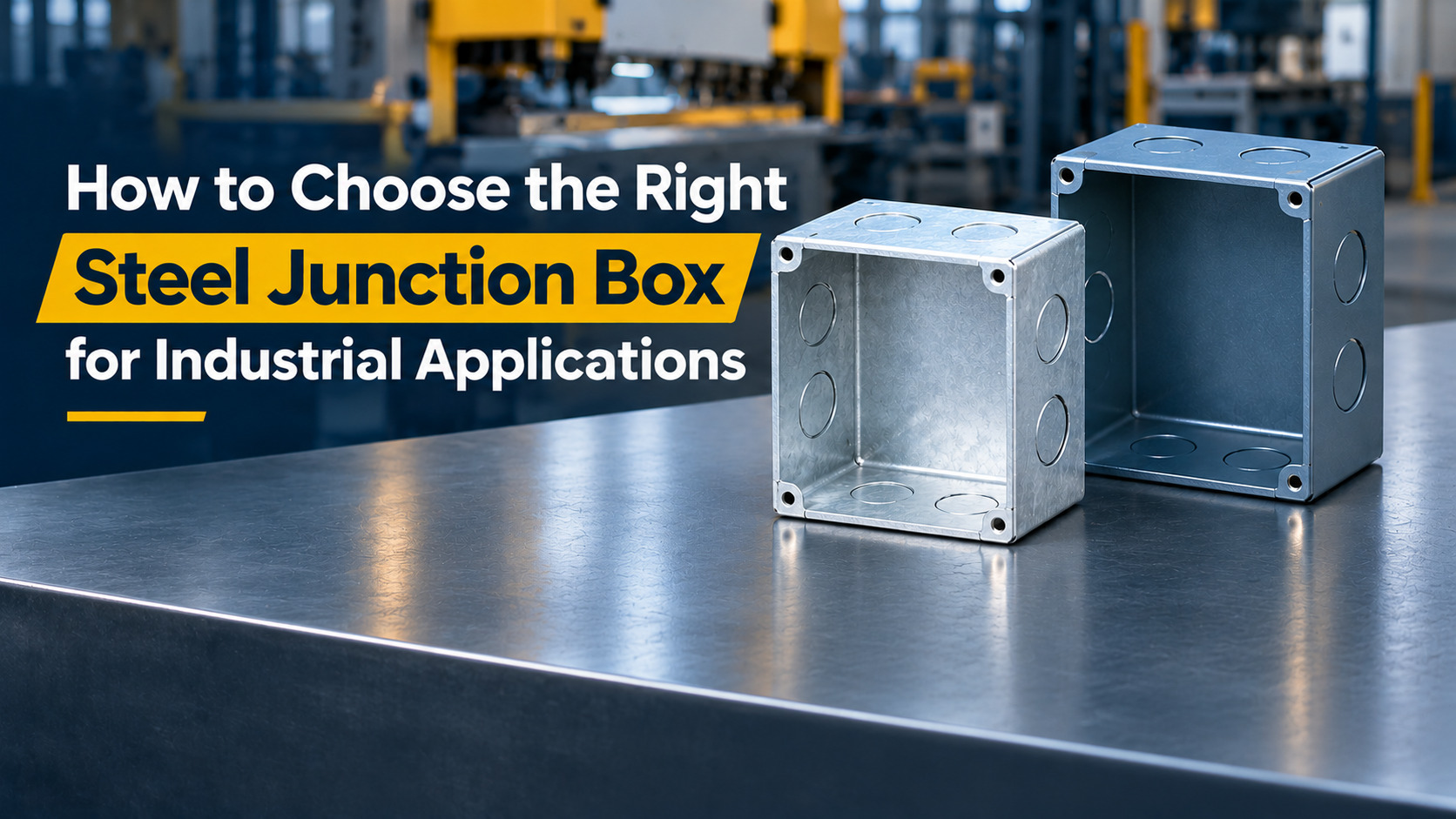
19 Nov How to Choose the Right Steel Junction Box for Industrial Applications
Electrical connections in factories, plants and outdoor installations face dust, moisture, vibration, heat and accidental impact every day. A poorly chosen enclosure can lead to downtime, safety incidents and costly rework. Selecting the right steel junction box protects wiring, keeps people safe and extends the life of the whole installation. This guide explains the factors that matter, from material and protection ratings to customisation and supplier selection, so you can specify with confidence.
Why an Industrial Steel Junction Box Matters in Demanding Environments
An industrial steel junction box does far more than hide cables. It forms a protective shell around connections, splices and terminals where failures are most likely to occur.
Protecting Connections
Loose or exposed connections are a leading cause of electrical faults. A sealed, rigid enclosure shields them from dust, oil, water spray and mechanical knocks, which keeps circuits stable and reduces unplanned stoppages.
Safety and Compliance
Plants must meet electrical safety standards and insurance requirements. A properly rated enclosure contains sparks and heat, prevents accidental contact with live parts and supports audits by providing clear, documented protection levels.
Long Term Reliability
Industrial sites are tough on equipment. Robust construction means fewer replacements, less maintenance and better value over the full life of the installation, even when the purchase price is higher at the start.
Key Factors to Consider Before You Buy
When specifying a steel junction box, start with the operating environment and work outward to the details.
Material Grade and Thickness
Mild steel is strong and economical for indoor use. Galvanised steel adds corrosion resistance for damp areas, while stainless steel grades such as 304 and 316 suit food, marine and chemical settings. Thicker sheet gives greater impact resistance but adds weight.
Ingress Protection Ratings
IP and NEMA ratings describe how well an enclosure resists dust and water. Indoor dry areas may need only IP54, while washdown zones or outdoor sites often call for IP65 or IP66. Match the rating to the harshest condition the box will meet.
Size and Internal Capacity
Allow space for terminals, bend radius of cables and future additions. Overcrowding causes heat build up and makes maintenance difficult. A little extra volume at the design stage is inexpensive insurance.
Mounting, Entries and Access
Consider how the box will be fixed, where cables will enter and how technicians will open it. Hinged doors, quarter turn latches and removable gland plates make installation and servicing faster.
Surface Finish
Powder coating, galvanising or passivation protects the surface and improves appearance. Choose a finish suited to UV exposure, chemicals and cleaning routines on your site.
Is a Metal Junction Box Better Than Plastic?
Plastic enclosures are light and affordable, so it is fair to ask whether a metal junction box is worth the extra cost. In many industrial settings the answer is yes.
Strength and Impact Resistance
Steel withstands heavy knocks, falling tools and vehicle vibration far better than plastic, which can crack or become brittle with age and sunlight.
Fire Resistance and Shielding
Steel does not melt or feed a fire, and it provides electromagnetic shielding for sensitive control circuits. It can also be earthed easily, which adds a further layer of protection.
Temperature Performance
Steel tolerates high ambient temperatures and heat from nearby equipment without warping, making it a dependable choice for furnaces, engine rooms and process plants.
When a Custom Steel Junction Box Makes Sense
Standard sizes suit many jobs, but some projects need something different. A custom steel junction box is built to your drawing, so it fits the space and the wiring layout exactly.
Unusual Dimensions and Layouts
Tight machine frames, odd panel shapes or crowded cable routes often rule out catalogue sizes. A made to order enclosure uses the available space efficiently and avoids awkward adaptors.
Special Cutouts, Doors and Finishes
Custom builds can include pre punched glands, viewing windows, extra mounting plates, special locks and specific colours or coatings, so the finished unit arrives ready to install.
Volume and Cost Considerations
For repeat production, a tailored design can lower assembly time and reduce waste. Share drawings, quantities and standards early so the manufacturer can advise on practical improvements.
What to Look for in a Steel Junction Box Manufacturer
The quality of the product depends heavily on the factory behind it. A capable steel junction box manufacturer should demonstrate both technical skill and consistent processes.
Fabrication Capability
Look for in house laser cutting, CNC bending, welding and powder coating. Controlling these steps under one roof leads to tighter tolerances, better sealing and faster turnaround.
Quality Systems and Testing
Ask about ISO 9001 certification, dimensional inspection, coating thickness checks and ingress protection testing. Request test reports and material certificates so every batch can be verified.
Engineering Support
A good partner reviews your drawing, flags manufacturability concerns and suggests design tweaks. Sunex India supports buyers with drawing review, material guidance and sampling before volume production begins.
Finding a Reliable Industrial Junction Box Supplier
Whether you buy directly or through a trading partner, a dependable industrial junction box supplier keeps your projects on schedule. Sunex India serves industrial customers across India, the UK, Canada, Saudi Arabia and Germany, providing manufacturing and export support for a range of industrial components and customised products. The company focuses on understanding customer specifications, maintaining consistent product quality and coordinating reliable deliveries for international projects. Whether buyers require standard steel junction boxes or customised enclosures based on specific drawings, Sunex India aims to provide practical manufacturing solutions that meet their application and quality requirements.
Lead Times and Minimum Orders
Confirm production lead times, shipping options and minimum order quantities. Clear schedules help you plan installations and avoid site delays.
Documentation and Traceability
Check that the supplier provides packing lists, test certificates and export paperwork where needed. Traceable materials make audits and warranty claims much simpler.
After Sales Support
Responsive communication matters when something goes wrong. Choose a supplier who answers questions quickly and stands behind the product. Exporters such as Sunex India can also coordinate samples, inspection and shipping for international customers.
Quick Selection Checklist
Use this list when comparing options:
- Confirm the operating environment, including dust, water and chemicals
- Choose the correct steel grade and sheet thickness
- Match the IP or NEMA rating to the harshest conditions
- Allow spare space for future wiring and heat dissipation
- Plan mounting, cable entries and door access in advance
- Select a suitable surface finish and coating
- Verify certifications, test reports and sample quality
- Compare lead times, pricing and support
Conclusion
Choosing the right enclosure comes down to understanding your environment, matching the specification to real conditions and working with a partner who builds to a consistent standard. Take time to define material, protection rating, size and finish, and always check samples and documentation. If you need dependable enclosures made to your requirements, Sunex India is ready to discuss your drawings and support your next project.
Frequently Asked Questions
What IP rating do I need for outdoor installations?
IP65 or IP66 is typically recommended to resist rain, dust and washdown.
Which steel grade resists corrosion best?
Stainless steel 316 offers the best resistance, especially in marine and chemical environments.
Can enclosures be made to my own drawings?
Yes, manufacturers can produce enclosures to your drawings, including cutouts, finishes and mounting features.
How should junction boxes be earthed?
Bond the enclosure to the earth system using a dedicated earthing stud and suitable conductor.
How long does production usually take?
Standard items often ship in two to three weeks, while custom orders may take four to six weeks.